1. The Industrial Energy Crisis & The Need for Storage
Pakistan's Commercial and Industrial (C&I) sector—comprising textile spinning mills, pharmaceutical plants, food processing facilities, and steel re-rolling operations—faces unprecedented dual headwinds: soaring grid electricity tariffs and power quality instability.
While thousands of factories installed extensive rooftop solar PV arrays over the past five years to offset daytime energy costs, grid power quality during late afternoon and evening hours has deteriorated. Micro-outages, frequency fluctuations, and voltage sags lasting mere milliseconds routinely trip sensitive computerized spinning looms, CNC machinery, and automated packaging lines.
To keep factories running continuously, industrial units were forced to operate massive megawatt-scale diesel generators on idle 'spinning reserve'—a process that burns thousands of liters of expensive imported diesel daily even when solar energy is abundant.
2. The Benchmark Project: 7.88 MW Solar + 7.63 MWh Containerized BESS
To solve this operational vulnerability, leading industrial engineering firms including Reon Energy and textile conglomerates like Soorty Textile executed landmark utility-grade Solar-plus-Storage deployments.
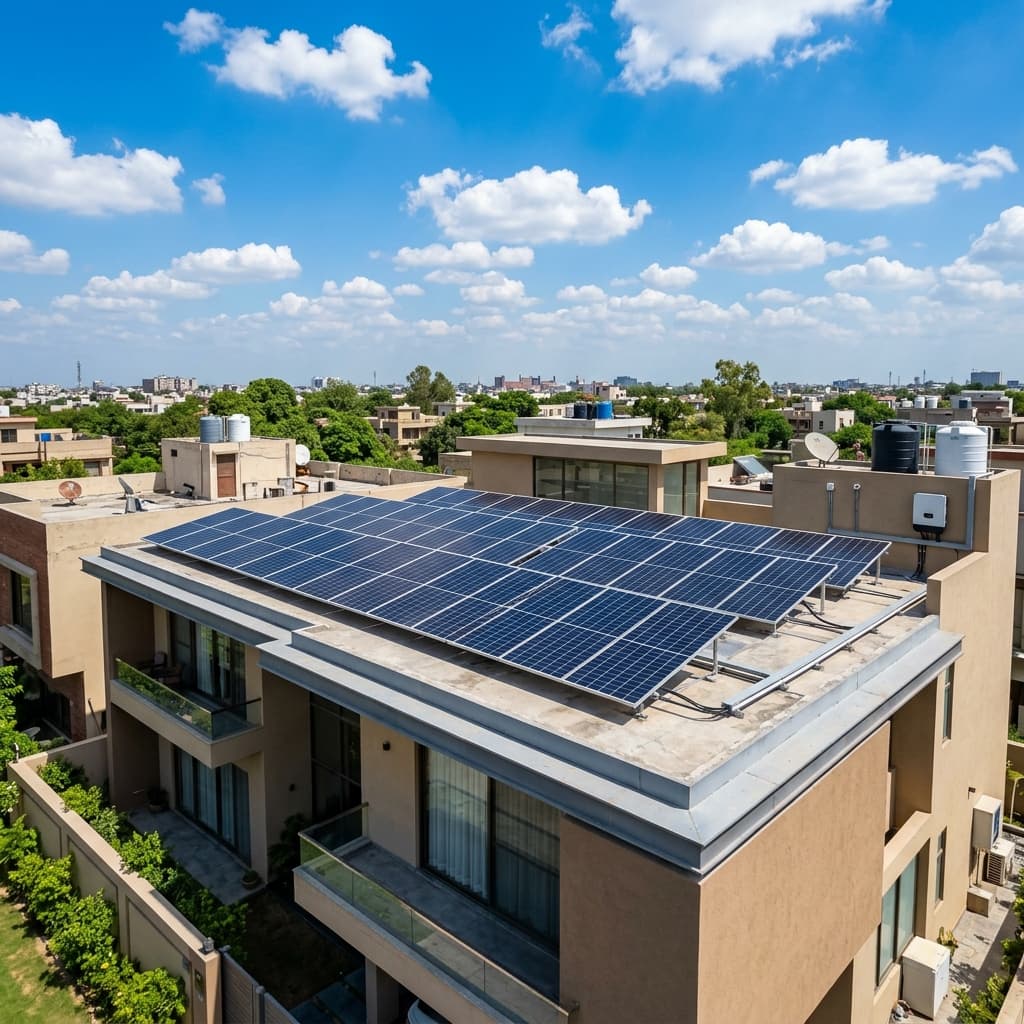
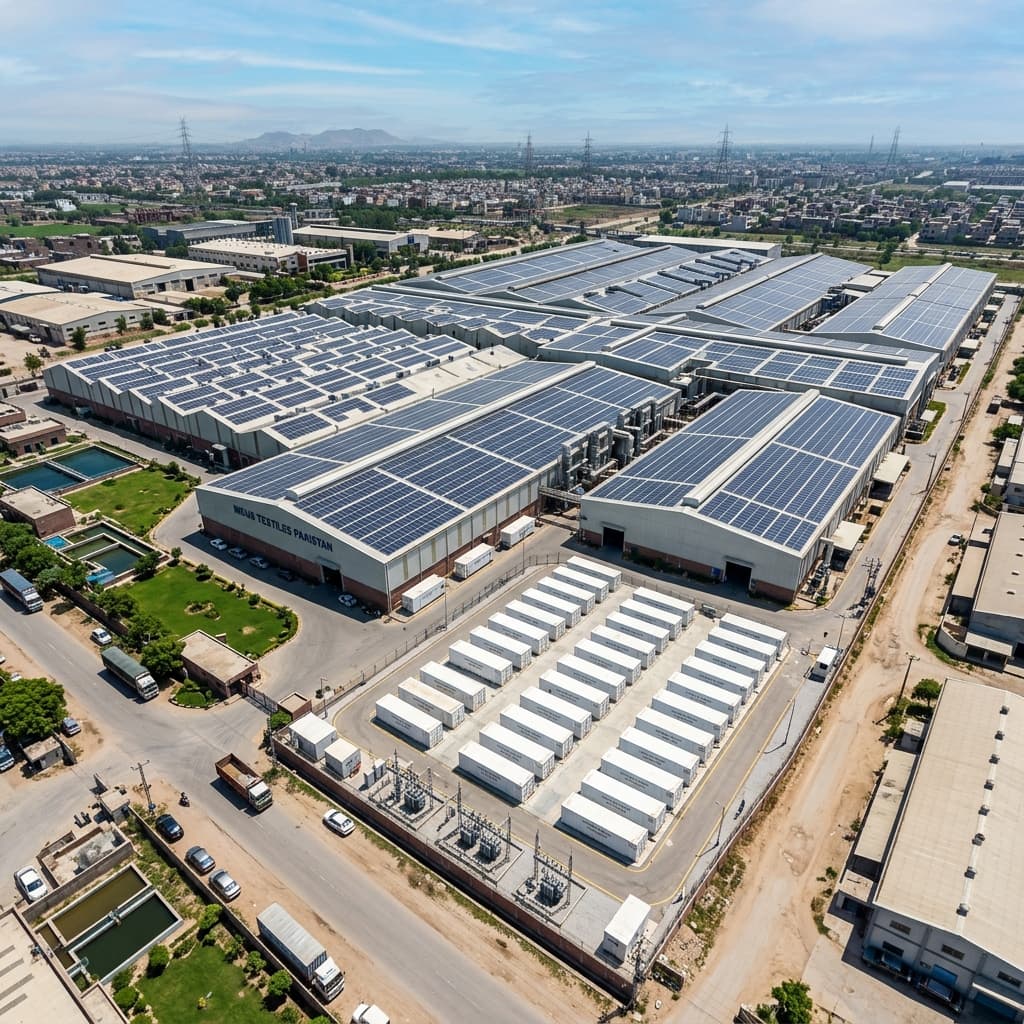
A flagship benchmark installation commissioned in the Karachi industrial zone paired a 7.88 MW rooftop photovoltaic array with a 7.63 MWh containerized Battery Energy Storage System (BESS).
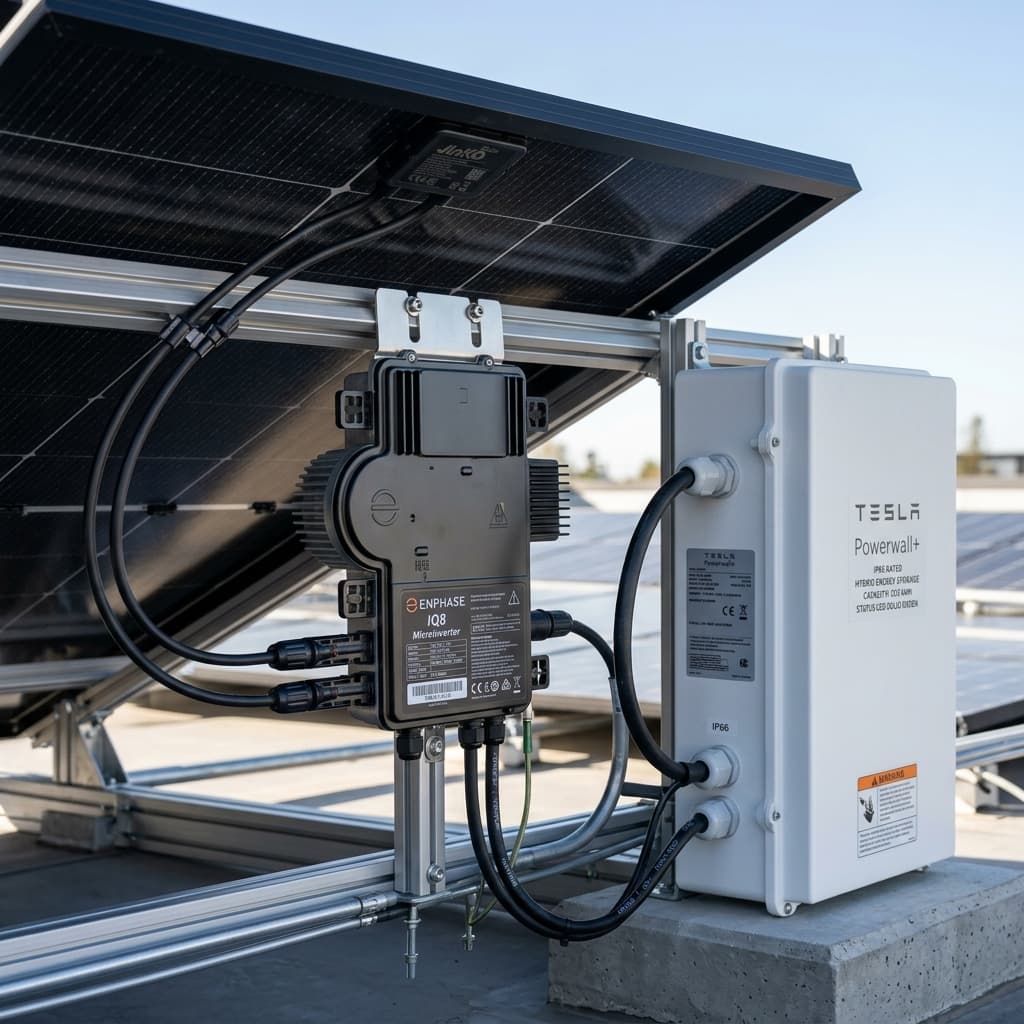
Housed in climate-controlled 40-foot ISO shipping containers, the battery storage facility utilizes high-density Lithium Iron Phosphate (LFP) cells equipped with liquid thermal management, active fire suppression, and grid-forming bi-directional central inverters.
"For a textile exporter, a 5-second power trip costs hours of machine recalibration and wasted raw material. Industrial BESS isn't just about saving fuel—it's about operational continuity and export deadline precision."
- 7.88 MW Peak Solar Capacity: Over 12,500 high-efficiency N-Type bifacial solar panels installed across factory shed roofs.
- 7.63 MWh Energy Storage Capacity: Heavy-duty containerized LFP battery bank capable of discharging 2.5 MW continuously for over 3 hours.
- Sub-10ms Seamless UPS Transfer: Instantaneous power bridge that prevents automated loom stoppage during grid trips.
- Annual Diesel Savings: Over 1.8 million liters of diesel fuel eliminated annually per facility.
3. Financial Economics & Operational Payback
The capital expenditure for multi-megawatt industrial BESS installations is substantial, but the financial returns are compelling when evaluated against diesel generator operation.
At current diesel prices (exceeding PKR 280/liter), operating a 2 MW diesel generator costs over PKR 95 per kWh generated. In contrast, the levelized cost of energy (LCOE) for solar power stored in an LFP battery system averages between PKR 22 and PKR 26 per kWh over its 15-year operational lifecycle.
By utilizing stored solar energy to absorb peak evening production shifts, industrial plants save tens of millions of rupees monthly, achieving full project payback within 3.8 to 4.4 years.
4. Carbon Footprint Reduction & International ESG Requirements
Beyond direct cost reduction, industrial solar-plus-storage is a critical requirement for international trade. European Union regulations—including the Carbon Border Adjustment Mechanism (CBAM)—impose strict carbon tariffs on imported manufactured goods based on their production emissions.
By replacing fossil-fuel spinning reserves with clean solar storage, textile exporters reduce their Scope 1 and Scope 2 greenhouse gas emissions by over 12,000 metric tons of CO2 annually per plant.
This sustainability certification provides Pakistani exporters with a distinct competitive advantage over regional competitors in Bangladesh, Vietnam, and India when bidding for international retail brand contracts.
5. Future Outlook for Industrial Energy Storage in Pakistan
As grid tariffs continue to evolve and peak demand surcharges increase, the adoption of industrial BESS is projected to grow exponentially.
Soltronic Energy's Utility Infrastructure Division is currently engineering over 45 MWh of containerized BESS projects across industrial estates in Faisalabad, Sialkot, Sheikhupura, and Gadoon Amazai. Industrial factory owners are urged to evaluate battery integration to secure energy independence and long-term financial profitability.